



One of the most common assumptions people make when planning retirement in Florida is:
“We should probably be looking at a 55+ community.”
Sometimes that’s true.
But very often, it’s not — and people don’t realize it until after they’ve moved.
This guide explains the difference between:
True 55+ active adult communities
“55-friendly” neighborhoods that function similarly without age restrictions
And more importantly, how to decide which one actually fits your lifestyle.
Why 55+ Communities Feel So Appealing at First
55+ communities solve a very real fear for out-of-state retirees:
Will we meet people?
Will we feel isolated?
Will we find “our people”?
Active adult communities reduce that uncertainty by offering:
A similar age demographic
Shared life stage
Built-in social opportunities
For many buyers, that sense of guaranteed familiarity is extremely comforting — especially when moving to a new state.
What 55+ Communities Do Exceptionally Well
True 55+ communities tend to excel at:
Fast social integration
Organized activities and clubs
Purpose-built amenities
Low-maintenance living
If you’re:
Moving solo or as a couple
Highly social
Wanting structure
Looking for immediate community
A 55+ environment can feel like a shortcut to connection.
Where Some People Start to Feel Friction
Over time, some buyers discover tradeoffs they didn’t expect:
Limited housing styles
Less demographic variety
Heavier HOA structures
A lifestyle that feels more “programmed” than organic
This isn’t wrong — it’s just not for everyone long-term.
And this is where “55-friendly” neighborhoods enter the conversation.
What Is a “55-Friendly” Neighborhood?
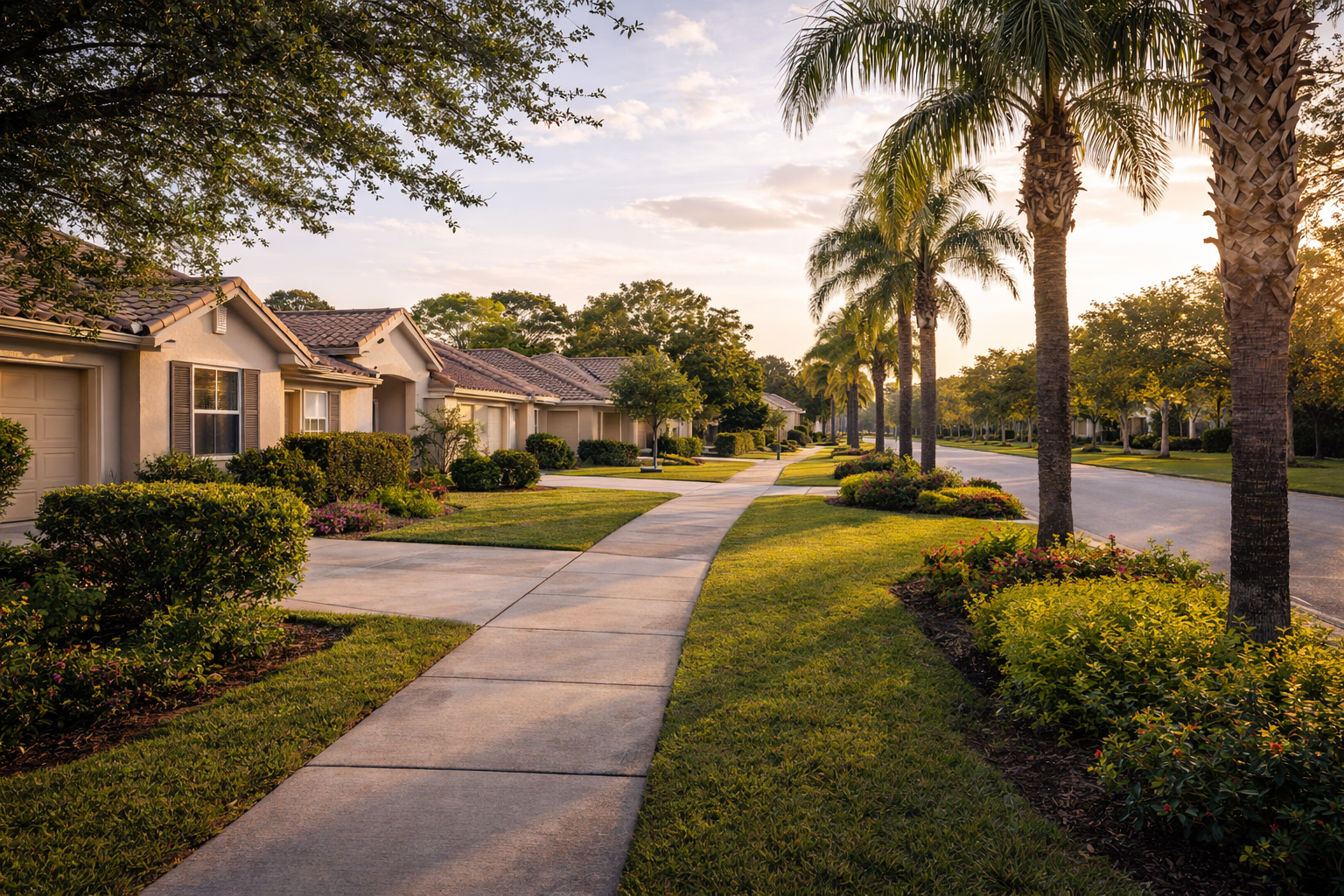
A 55-friendly neighborhood is not age-restricted, but functionally attracts retirees because of:
Single-story floor plans
Low-maintenance homes
Quiet streets
Strong sense of community
Optional social interaction
These neighborhoods often include:
Villas or paired homes
Master-planned layouts
Clubhouse or light amenities
A wide mix of empty nesters and retirees
In practice, they often live like 55+ communities — without the formal restriction.
The Key Difference: Optional vs Structured Community
Here’s the real distinction:
55+ Communities
Community is structured
Activities are scheduled
Participation is assumed
55-Friendly Neighborhoods
Community is optional
Interaction is organic
Privacy is easier to maintain
Neither is better — they simply suit different personalities.
Who Tends to Be Happier in Each
55+ Communities Often Fit People Who:
Want instant social access
Enjoy organized activities
Prefer predictability
Like living among peers
55-Friendly Neighborhoods Often Fit People Who:
Value flexibility
Prefer quieter routines
Want a mix of ages nearby
Don’t want a “retirement label”
This distinction becomes more important the longer you plan to live there.
The Mistake to Avoid
The biggest mistake is choosing a 55+ community out of fear, not preference.
Fear of:
Being lonely
Making the wrong choice
Missing out
The better approach is clarity:
What do you actually need day-to-day?
How much structure do you want?
How do you envision your social life five years from now?
How This Fits Into the Zero-Regret Formula
This is Step 2: Lifestyle, not Step 1.
You should already know:
Which geography fits you
What tradeoffs you’re comfortable making
Only then does it make sense to decide:
55+ community
Or 55-friendly alternative
Want Help Sorting This Out?
If you’re unsure whether:
A 55+ community is truly right
Or a non-restricted neighborhood would feel better
👉 Download the New Home Buyer Guide for a clearer comparison framework.
Or, if you want help applying this to your situation:
👉 Schedule a one-on-one discovery call with our team.
This isn’t about selling homes.
It’s about choosing the right environment.
Check out this article next